

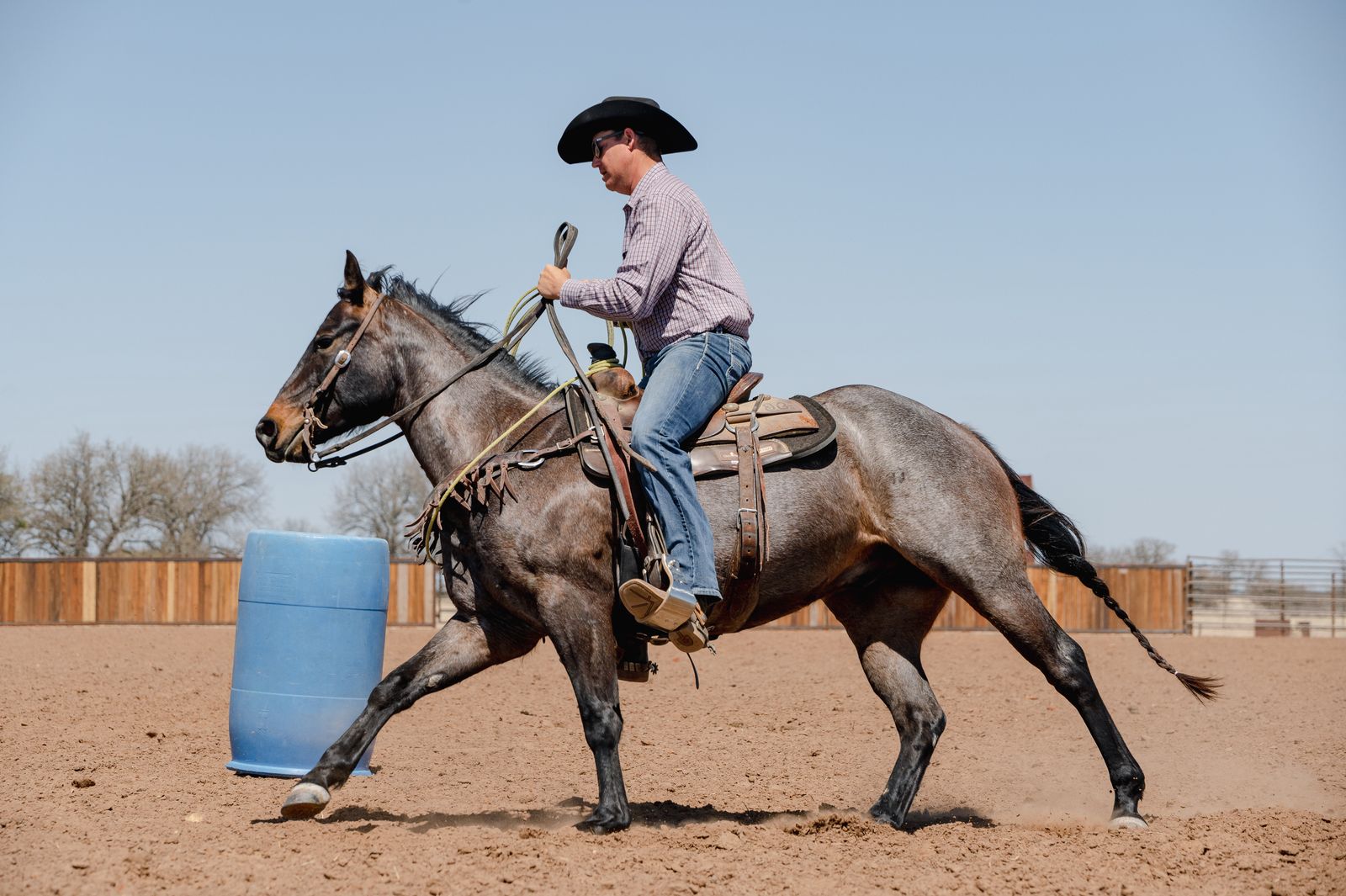
Justin Briggs puts a 3-year-old on a single barrel to teach body control, not to run a pattern. The goal is simple: the horse’s shoulders and hips stay the same distance from the barrel, and the barrel stays behind the rider’s leg.
Briggs does not run the barrel pattern on his young horses. He handles the circles and body control before Jordan Briggs gets on them, so the horses arrive at the pattern already steering off the rider’s leg.
The barrel is the reference point. If the horse’s shoulders and hips sit the same distance from it, the body is lined up. If one end drifts, the barrel shows it.
“I want the hips in line with the shoulders, which keeps the barrel right here behind my leg.”
Briggs shows the drill on a 3-year-old with little bridle work, so the lesson works for any green horse that has not yet learned to carry his own body through a turn.
Before you start
You need one barrel and open ground around it. Briggs rides a circle much bigger than a race-pattern turn, so give the horse room.
The drill fits:
-
- Green horses learning to carry their shoulders and hips as one unit
-
- Horses with little bridle work, since Briggs keeps his hands quiet
-
- Riders who lose track of where the hip is when the shoulder drifts
How to run the single-barrel drill
-
- Pick the barrel as your focal point. Ride a circle around it at a walk. Keep the barrel behind your leg and your eyes on it, so you always know where you are.
-
- Match the shoulder and hip distance. Both should stay the same distance from the barrel. Briggs does not want the hip shoved too close, which pushes the shoulders away, and he does not want the shoulders too close with the hip swung out.
-
- Test your hip control at the walk. Briggs moves the hip in and out, and sometimes pushes it in front of the horse on purpose, just to confirm he can place it anywhere. “If I couldn’t come in here and move it at a walk while his front feet are moving and push it out or push it in, I dang sure can’t do it at a trot.”
-
- Let the horse find the circle. Release and watch. Does he stay lined up on his own, cram his hip under himself or let it flail out? That tells you what to fix.
-
- Trot the circle. Hold the same alignment. Briggs’s rule at every gait: “Quit riding, he quits going.”
-
- Lope. Start in a bigger circle if the horse is green in the bridle, so you are not overworking your hands. Keep your eyes on the barrel and the horse’s hips and shoulders the same distance from it.
-
- Change direction. Roll him around and lope the other way, still watching the barrel and feeling the horse underneath you.
Fixing a hip or shoulder that drifts
When the hip or shoulder shoots out, Briggs uses his inside leg to disengage the hip, the same feel he uses for a lead departure. The horse’s inside hind leg starts to untrack and reach, which is the sign the hip is working.
The fix is to put the hip under the horse and in line with the shoulder, wherever it started. Briggs warns against the common shortcut:
“Sometimes people always just shove it to the inside, which shoots your shoulders out.”
If the hip is flailing to the outside or crammed to the inside, the answer is the same. Line it up with the shoulders, then check that the barrel is still behind your leg. WATCH HERE
Progressing the drill
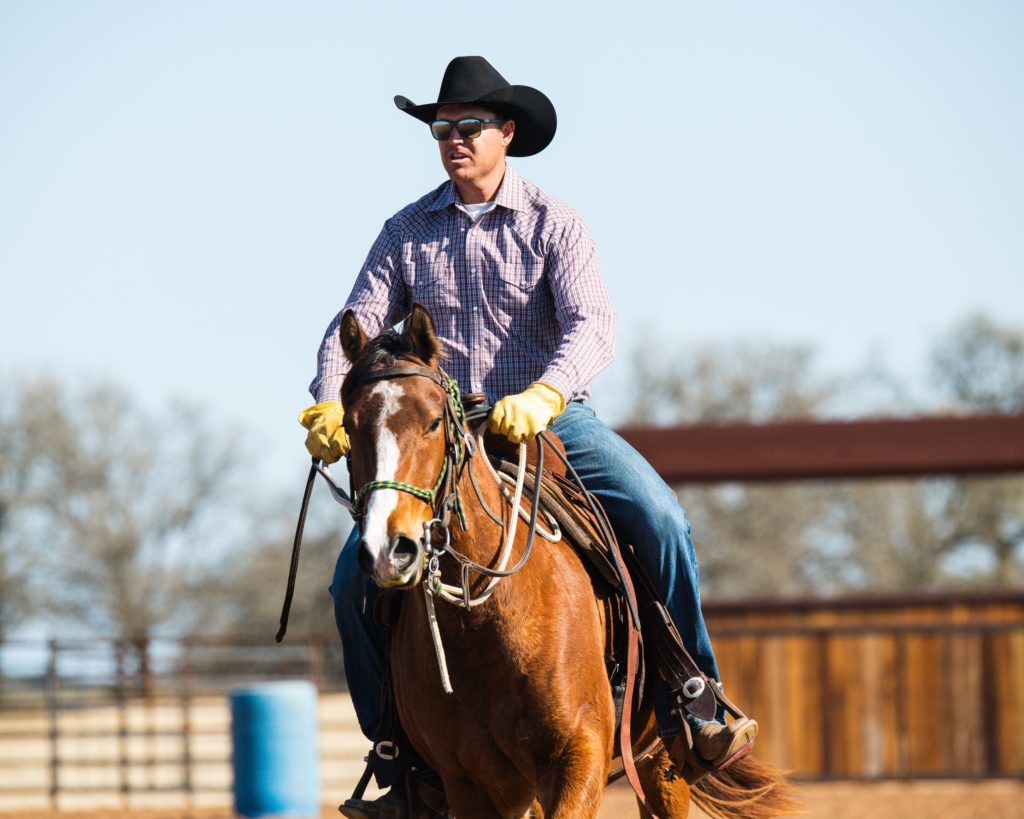
Once the horse holds the circle at the lope, Briggs adds a rollback. He turns the horse off one rein and does not shove the outside rein across.
The next step is getting the horse to lope out of his tracks after the turn. Briggs’s colt took a few strides to do it, and that was fine with him.
“Every day we’ll just see if we can get him to lope out of his tracks better and better.”
Briggs frames the whole drill as a progression: trot the perfect circle, then lope it, then roll back and lope out. He wants this body control in place before the horse goes to the pattern.
Watch more training on Ride TV
Ride TV carries BarrelRacing.com’s full instructional library, plus live and on-demand coverage of top barrel racing events. Start a free trial on Ride TV today.