

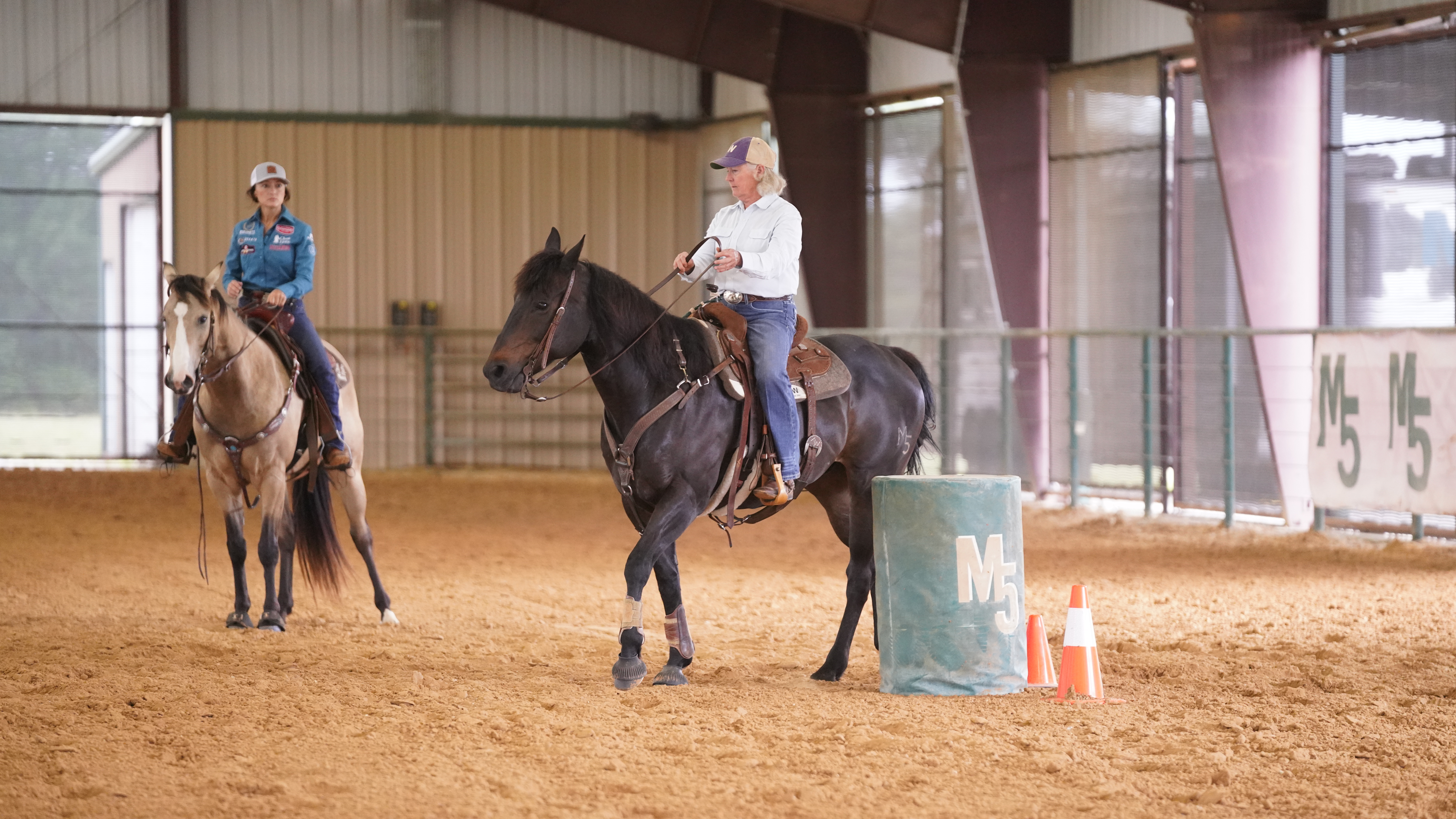
You know the feeling. You come into a turn and your horse is looking off, leaning on your hands, thinking about anything but the barrel in front of him. Martha Wright has a fix she reaches for when a horse checks out like that, and it is a simple figure 8 worked right at the turn.
Why the figure 8 drill
Wright pulls out the figure 8 for the horse that will not lock onto the barrel.
“Let’s say I have a horse that I just can’t get that horse to focus on this barrel,” she said. “They want to come into this turn and they’re looking off, they’re wanting to be distracted or they’re pushing on my hands, they’re not paying attention. I’m going to do this figure eight drill to set this horse into this turn.”
The horse in this session is older and not one that wants a lot of drilling, which is exactly why the figure 8 works. It is not busy work. It gives the horse a job right where the problem is.
How it works
The drill puts the horse at the turn and forces him to account for his own feet.
“It makes him have to think about where he’s putting his feet, what he’s doing with his feet,” Wright said. “So he comes back to me.”
That last part is the whole point. A horse that has to think about his footwork stops looking off and comes back to your hand.
Dial it in: soften or quicken
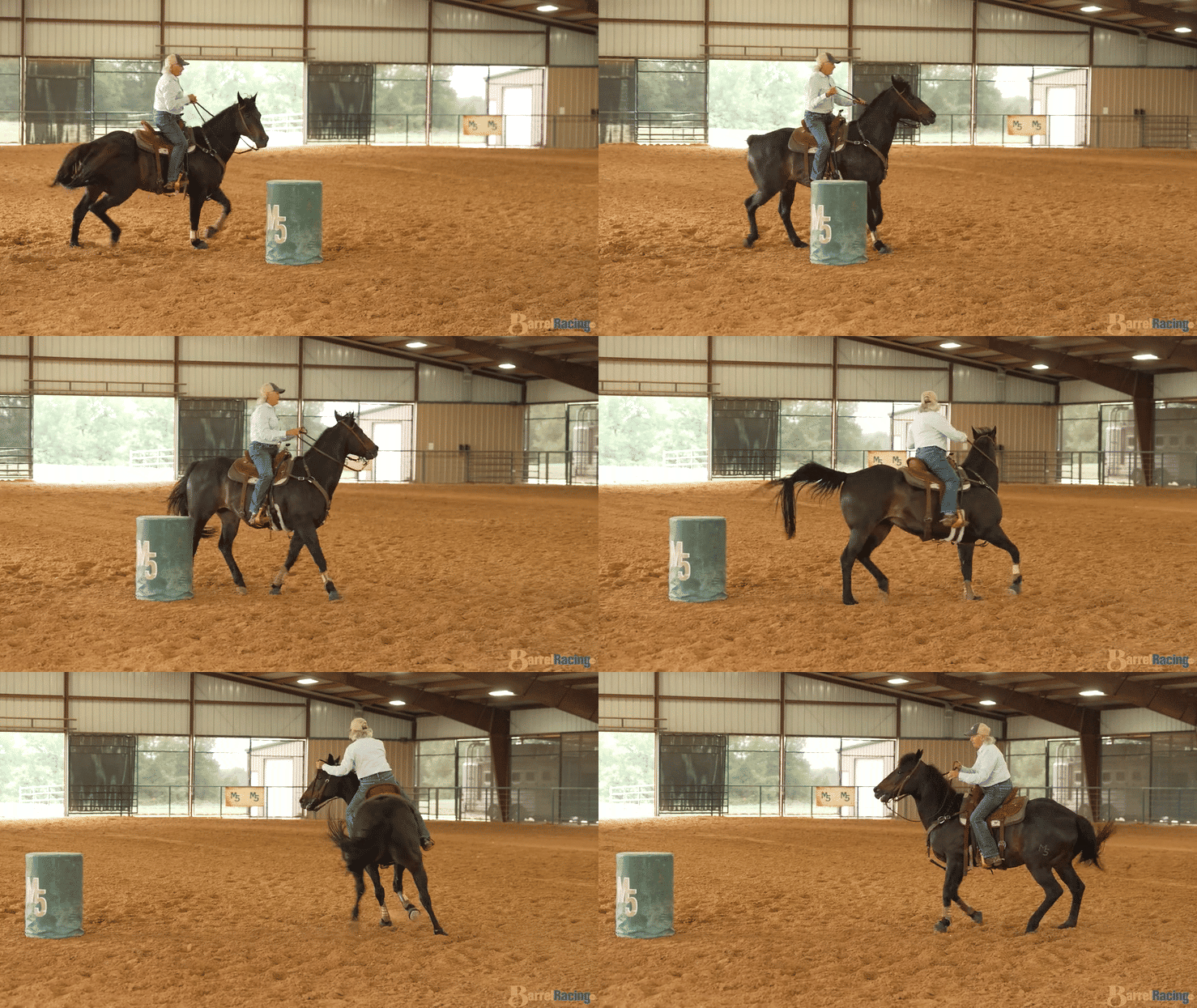
The same figure 8 does two different jobs depending on how you shape it. Want to soften a horse and keep him moving forward? Open the circles up. Want to quicken his feet and sharpen him up? Tighten the backside.
“If I want to soften that horse and I want him to move forward, I’m going to make my circles bigger,” Wright said. “But if I want to quicken his feet up, I’m going to tighten the backside of this up.”
One drill, two outcomes, and you decide which one your horse needs that day.
What it builds
Beyond focus, the figure 8 sets a horse up to leave the turn correctly. Wright uses it to get lateral movement coming out of the turn so the horse picks up the correct lead going away from the barrel instead of fighting for it.
“It just puts that horse in a correct position to go away from that turn and pick that lead up,” she said.
Jordon Briggs, working alongside Wright in the session, pointed to what it does for the front end and the hip.
“What I really like about it is it quickens their front end up, makes them be able to move their neck, their nose, their front end in different directions,” Briggs said. “But then I also really liked it for it taught him how to get that hip out of the way and you have good hip control with it.”
Quick front end, correct lead, and a hip that moves out of the way. That is a horse in position to run.
Variations
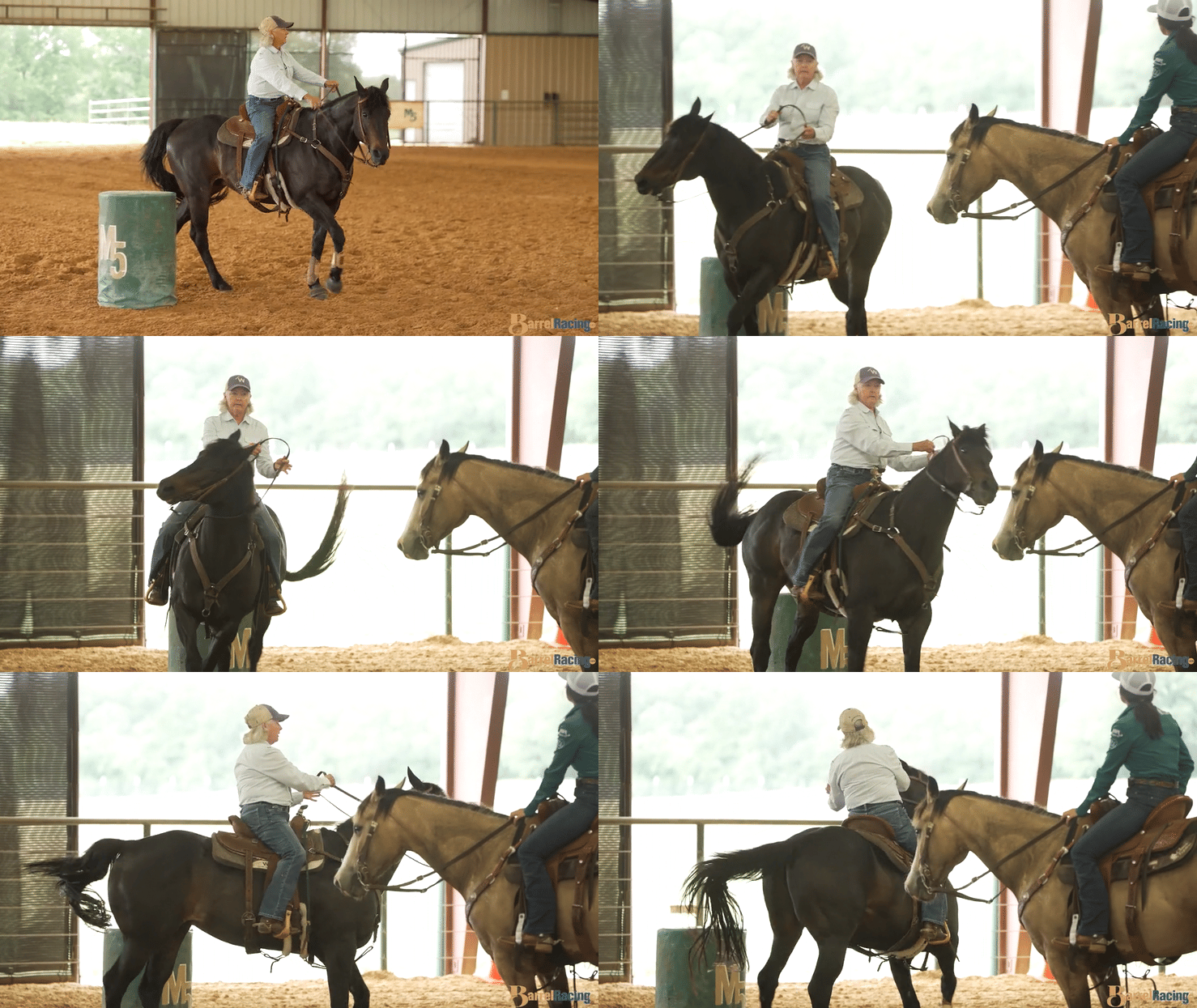
You can ride the figure 8 off the inside rein, and for a horse that will not pick that shoulder up, Wright will add a reverse arc through the turn. She uses it sparingly on purpose. She wants the forward, driving motion of the standard figure 8 rather than the bracing feel a reverse arc can create, so the reverse arc stays a tool for a specific problem instead of an everyday drill.
Put it to work
Next time you have a horse that will not commit to a barrel, set him into the turn with a figure 8. Open it up to soften him, tighten the backside to quicken his feet, and let the drill bring his focus and his feet back to you.
Watch the full session with Martha Wright and Jordon Briggs on Ride TV.
About Ride TV
Better horsemanship, a stronger mentality, faster and smoother runs—BarrelRacing.com’s Ride TV channel offers training videos from beginner to advanced barrel racing instruction from the most respected voices in the industry. Cut time, gain confidence and win more with the best training tool for barrel racers. Subscribe now for just $19.99/month to learn from top hands like Jordon Briggs, Ryann Pedone, Cheyenne Wimberley and Danyelle Campbell.