


When it comes to starting young horses, Justin Briggs breaks it down in a way that actually makes sense. In these sessions on Ride TV, Briggs walks through how he uses his hands, his legs, and his spurs to get different things done on a colt, and why the order he uses them in matters.
Start with your hands
For Briggs, the hands come first. Every time.
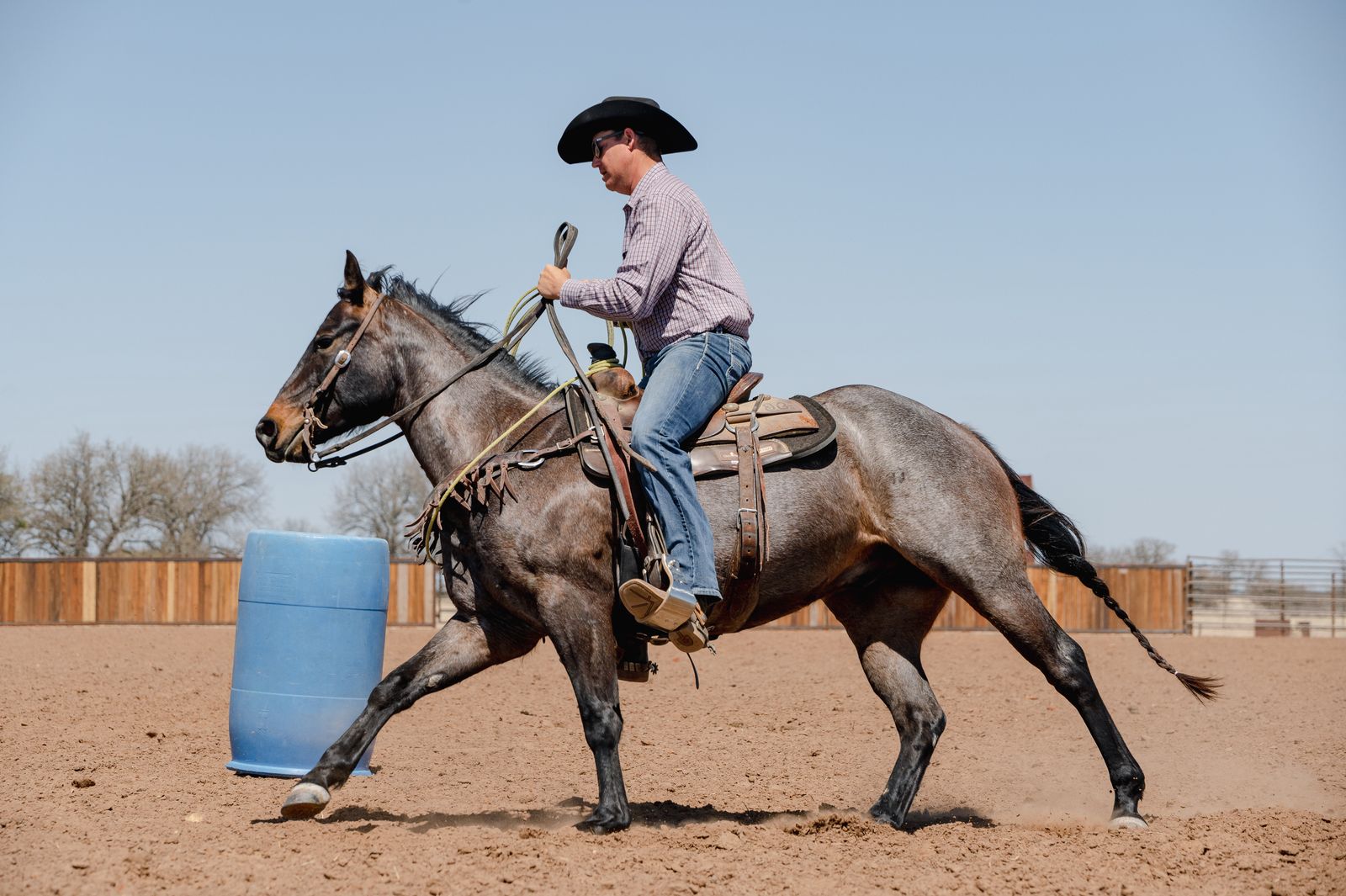
“Running barrels, roping, both, you’re riding that horse ahead. They should be steering off of your hands, so that should be your first cue.”
His hand position stays up, a little above the swells, not down low the way a lot of riders were taught early on. When his body position is up, the horse comes up with him. He keeps his reins short enough that if he pulls, he isn’t pulling far, but long enough that he isn’t nagging the horse when he doesn’t mean to.
There’s a second rein that mostly just goes along for the ride at this stage. Briggs keeps it there on purpose, so it isn’t a surprise later when he rides the horse one-handed to rope or asks for a more advanced turnaround. It isn’t doing much yet. It’s just getting the horse used to the idea.
Watch Hand Position When Riding Colts here.
Legs are for reinforcement, not steering
The legs come second, and they do a specific job. Briggs uses them to keep the horse moving up underneath him and tracking straight, not to steer.
“Legs are just there to reinforce that horse to stay going through the center of the barrel, to be moving up under you.”
He rides with spurs even on the first ride, but that’s a function of his own build. His legs are long, so his calf and the top of his boot make contact well before the spur ever does. His advice for a shorter rider starting a colt is to skip the spur until the horse is responsive to the hand and a bump with the leg, because a spur that catches a green colt by surprise can send you off to the races before the horse understands the question.
Watch Using Your Hands and Feet Correctly When Riding Colts here.
Don’t over-flex a young horse
This is the through-line in everything Briggs does with a colt. He wants the nose connected to the feet, and he gets there by keeping the horse soft and unafraid of his hands and legs.
“The less you over-flex a young horse, the more they’re going to go right when you ask them to go.”
If he bangs around with his feet or pushes too much, the horse won’t stay soft in the neck while it’s learning the bridle. So he keeps it quiet. When a green colt leans one way, he doesn’t spur it back. He takes his hands the other way and redirects. He zigs and zags, mixes in some little half rollbacks, then straightens up to check whether the horse is tracking and going forward on its own.
Show the horse where to go
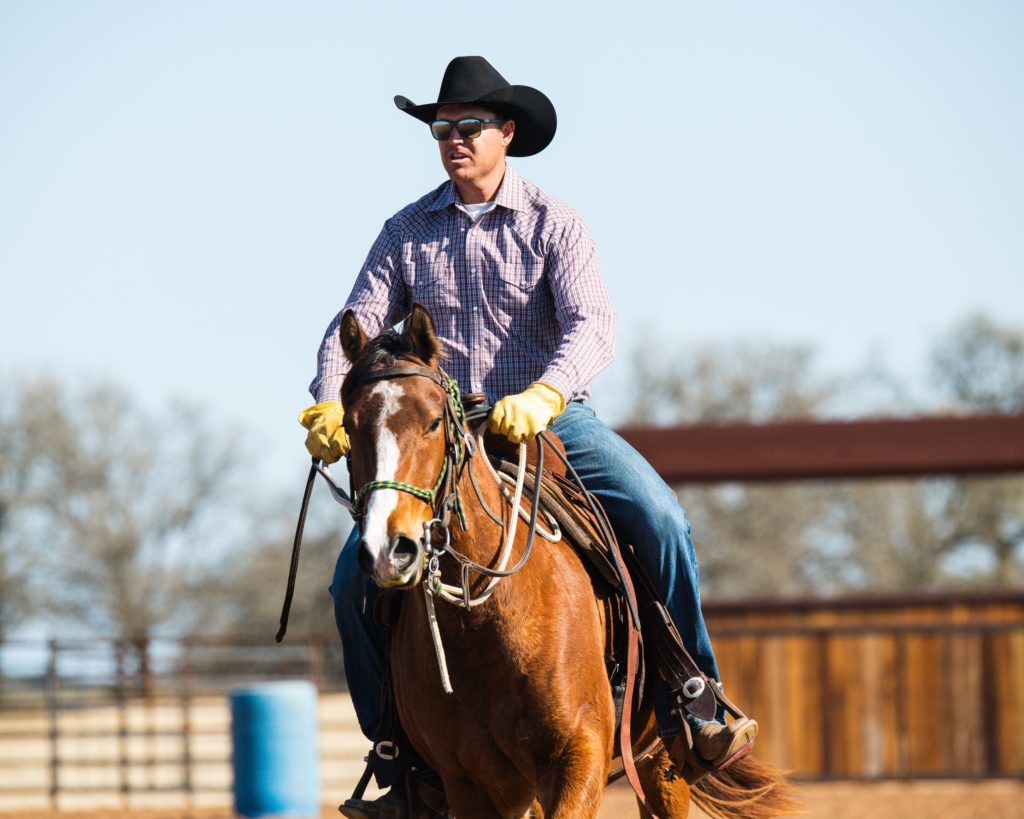
When Briggs rides a colt around a barrel, he isn’t crossing over the neck to hold it off the barrel. He’s showing the horse where to go and letting his feet say, follow that spine.
“I’m only doing that stuff to reinforce that when I put my hands down, that’s the frame I want. I only move them around with my feet and do stuff with my feet when they’re not finding that on their own.”
He isn’t trying to hold a horse in a frame. Holding a frame all the time is hard on them, and eventually they start running into your hands. The goal is a colt that finds the right frame on its own, so that when Briggs puts his hands down, the horse is already there.
Watch Using Your Hands and Feet Correctly When Riding Colts here.
About Justin Briggs
Originally from Fort Pierce, Florida, east of Okeechobee, Briggs moved to Stephenville in 1998. Training horses has always been a part of Briggs’ life. He got his start with horses from his grandma, who trained hunter jumpers and dressage horses, while his mom rode cutting horses. Briggs started off in the cutting, started roping in the fifth grade and went on to have a successful roping career in college both heading and heeling. He married World Champion barrel racer Jordon Briggs in 2010, and the couple settled in Tolar, Texas, in 2021. Their business, Briggs Performance Horses, focuses mainly on producing top barrel horses, barrel horse prospects and rope horses.
In his colt starting masterclass, Briggs gives you the information you need to start and bring along your top barrel horse prospect. He uses a thoughtful, well-rounded approach with a focus on quality over quantity.
“We raise two or three a year on our own, and buy some long yearlings. I start all of our colts,” says Briggs. “I put about 120 days on them, then when they’re safe and ride pretty well, Jordon (Briggs) starts putting a barrel pattern on them and I start roping a sled or lead steer on them. Jordon trains everything on the poles, too. Jordon and I run our business top to bottom. We’re not an assembly line.”
- Hailey Kinsel, Fallon Taylor Head to the Fence at Big Guns in Cowtown: How to Watch on Ride TV
- Stallion Hes The Goodz Poised for All-Around Career After Topping Pink Buckle Sale at $205,000
- Passionate Piper: Homebred Buncha Dinero Named 2026 Horse of the Year Beneath Hayle Gibson-Stillwell
- A Streak Of Fling Bloodlines Lead Fulton Performance Horses Online Production Sale, Oct. 18–19
- PROFiles: The Katelyn Scott Story