


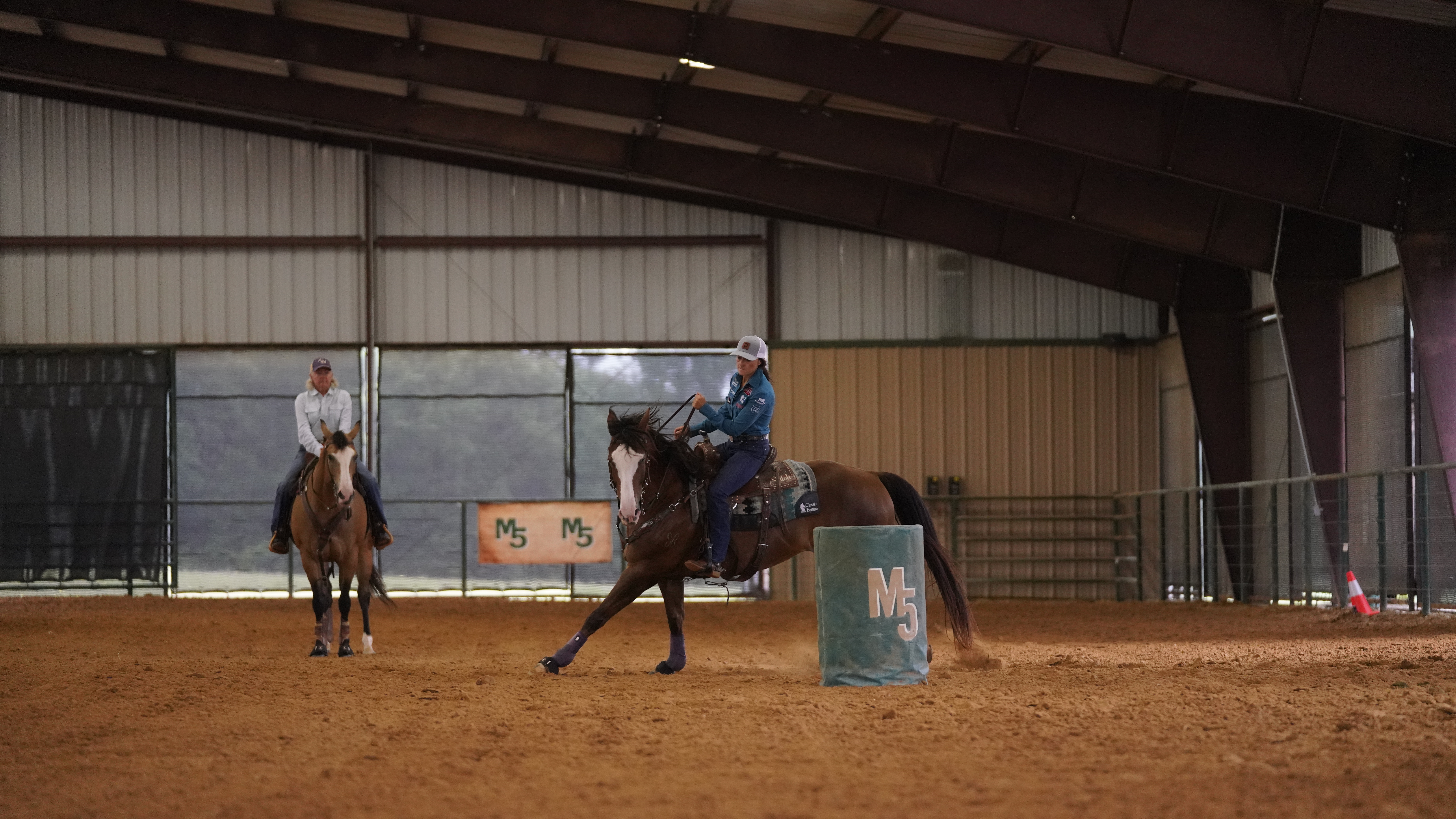
Jordon Briggs and Martha Wright talk timing, balance, and body control.
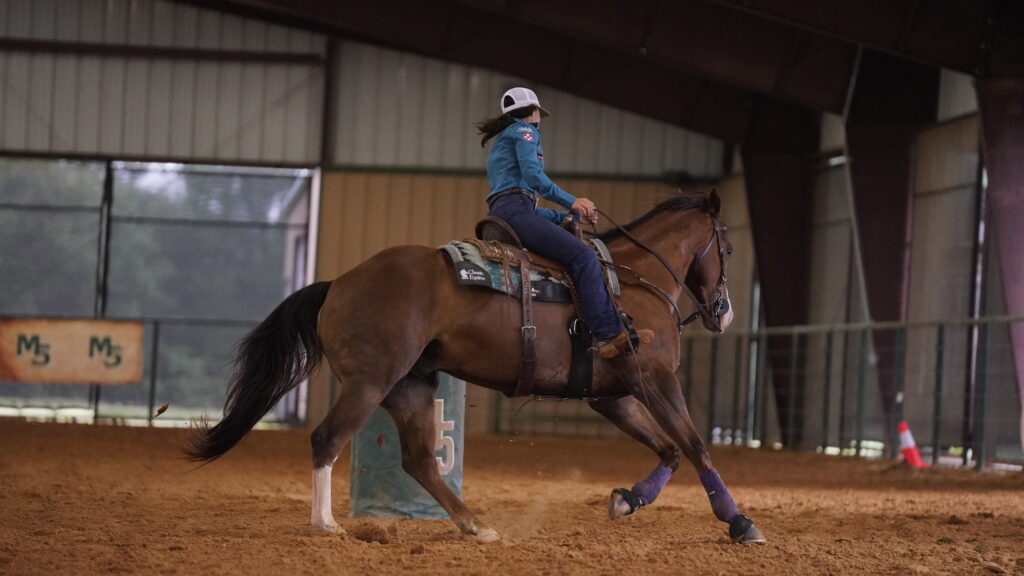
One of the most common questions barrel racers ask—whether they’re seasoning their first colt or refining their futurity program—is, “When should I go one-handed?” It’s not just a rite of passage in a horse’s development; it’s also a major transition in communication between horse and rider.
In this candid conversation, world champion barrel racer Jordon Briggs sits on the back of a 3-year-old gelding she’s been working with for five months and brings that very question to veteran trainer Martha Wright. The answer? Like many things in horsemanship, it depends—but it always starts with feel.
Start with Feel: Is Your Horse “In Your Hand”?
“I like to go one-handed off and on,” Martha explains. “So that colt starts to feel what one-handed control is like. But before I do that, I want to be sure he’s truly in my hand.”
That doesn’t mean making a hard switch from two hands to one overnight. Instead, it’s about gradually introducing the idea—sprinkling in one-handed moments during drills or pattern work to allow the horse to learn how to follow the rider’s lead without relying on constant guidance.
For newer riders, “in your hand” means the horse is soft in the face, connected through the body, and willingly follows light rein cues without bracing or confusion. It also means that the rider has enough feel to support that horse without overcorrecting or relying too heavily on the reins to steer.
Drill for Feel: The Pole Exercise
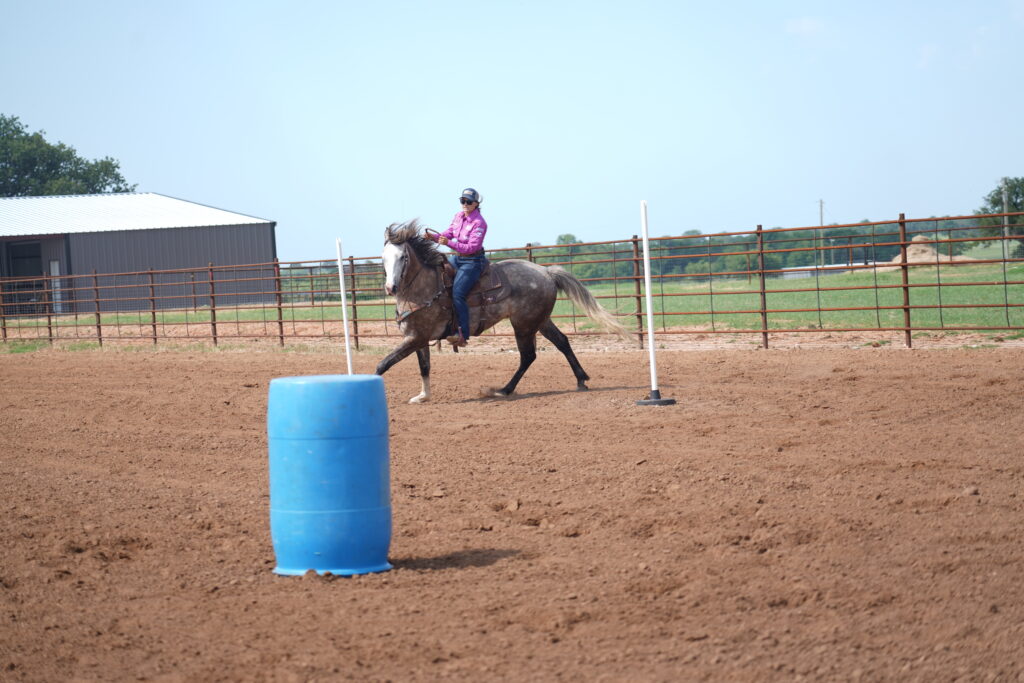
Martha recommends starting this transition off the pattern with a structured exercise like loping a line of poles.
“You lope a line of poles and teach that horse to handle the turn and go forward and turn and go forward on one single rein,” she says.
At first, you’ll likely ride it two-handed to help the horse stay balanced through the turns. But over time, as the horse begins to read your rein, body, and energy, you can begin testing moments of one-handed steering. If the horse starts drifting, loses cadence, or gets stuck, that’s a sign to go back to two hands and reinforce the feel again.
One of the biggest mistakes Martha sees is riders dropping that outside rein too soon. “They still need that balance in the turn for a little bit. But usually, you’ll feel when that horse is confident enough that you can drop that outside rein.”
Common Pitfalls: Shoulders, Hips, and Forward Motion
Jordon brings up a concern that’s shared by riders at every level: What if the horse starts falling apart when you go to one hand?
“Obviously, a fear of mine is the shoulder floating away,” Briggs says. “When you drop to one hand and you’re pulling around the turn, the shoulder can float out. The other bad thing is, if you go to lift with one rein and they stop their forward motion and just swing their butt out—they cheat the turn because they don’t know how to lift and go forward.”
This is why it’s critical not to jump ahead too soon. A horse who doesn’t understand one-handed riding can lose body position quickly—especially in high-pressure situations like pattern work or competition.
The solution? Introduce one-handed riding in low-stress environments where you can correct mistakes without creating anxiety. And, as Jordon was reminded in this ride, it’s not just about what’s in your hands—it’s about what’s happening in your seat and legs.
Ride With Your Body, Not Just Your Hands
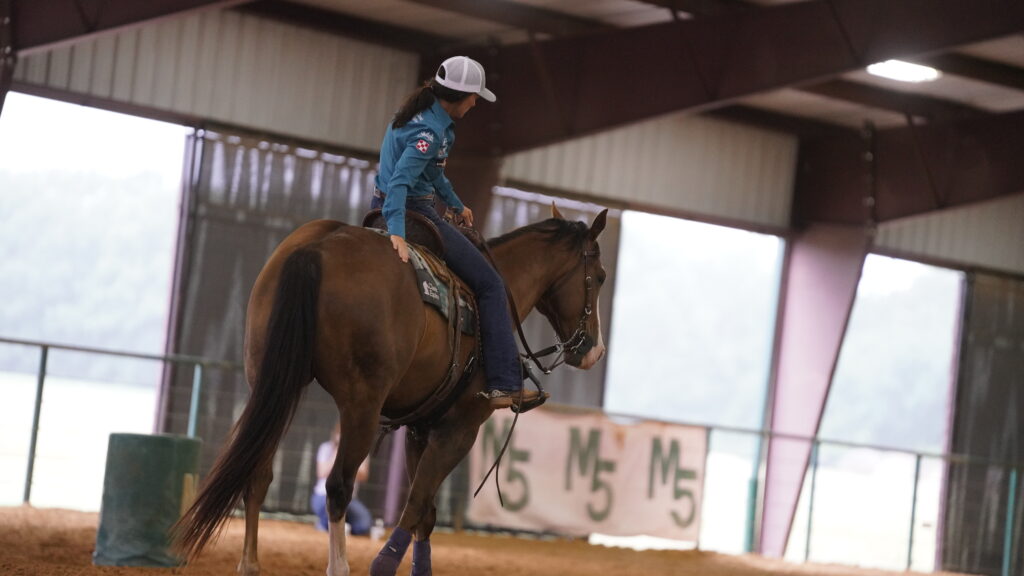
“What I realized today,” Jordon shares, “is I had too much stock in my hands and not enough in my body.”
A horse takes its cues from your whole body, not just your reins. When Jordon focused on her posture—sitting on her pockets, keeping her legs engaged, and staying relaxed—she found that the horse responded better, even when she tested a one-handed feel.
“Make sure when you’re testing your one rein, your body’s in the right position,” she says. “Because that was probably the most important thing I learned today.”
The Bottom Line: It’s About Timing, Feel, and Communication
So when is it time to go one-handed? The short answer: when your horse is ready. The long answer: when they’re soft, balanced, confident, and listening to your body as much as your rein.
Start by introducing one-handed moments during drills, not on the pattern. Don’t be afraid to go back to two hands if your horse loses balance or stops forward motion. And remember: your reins are only one part of the conversation. Your seat, your legs, and your timing do just as much talking.
As Martha says: “Find the feel.”
About Ride TV
Better horsemanship, a stronger mentality, faster and smoother runs—BarrelRacing.com’s Ride TV channel offers training videos from beginner to advanced barrel racing instruction from the most respected voices in the industry. Cut time, gain confidence and win more with the best training tool for barrel racers. Start your free trail today to learn from top hands like Jordon Briggs, Ryann Pedone, Cheyenne Wimberley and Danyelle Campbell.